How DNA Records Human History
The story of humanity is often told through the lens of written history, but the era of recorded events represents only a tiny fraction of our existence. If the entire timeline of life on Earth were a book, the period of modern humans would span only a single phrase, and the history of writing would be no larger than a single period at the end of a sentence. For centuries, we have relied on fragile documents, biased accounts, and decaying artifacts to understand our origins. However, a more durable and detailed record has been hidden inside our cells all along, and by treating DNA as a historical text, we can now reconstruct the journey of our species with unprecedented detail.
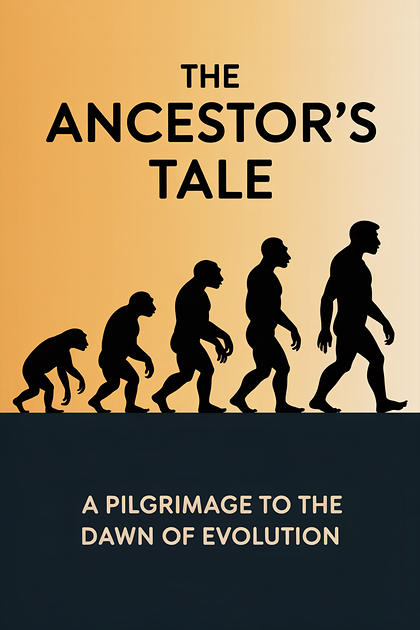
Every person carries a unique genome consisting of three billion letters of DNA. This genetic code is not just a blueprint for a human being; it is a sprawling saga of four billion years of trial and error. While we often think of our ancestry as a simple tree with neat branches, the reality is far more complex. As generations pass, pedigrees fold in on themselves and branches loop back to form a dense web. If we look back only a few dozen centuries, we find that the billions of people alive today are descended from a remarkably small group of ancestors, uniting us all as close cousins with a single origin in Africa roughly 200,000 years ago.
The process of creating a new life involves a massive shuffling of genetic material. Each child inherits a unique combination of their parents' DNA while also acquiring brand-new genetic variations. This constant mixing and mutation provide the raw material for evolution and create the markers that scientists use to track human migration across oceans and eras. By comparing these differences across populations, geneticists have essentially become historians, capable of tracing how our ancestors roamed the planet and how different groups are related to one another.
This new science of genomics has moved beyond studying only the powerful or the famous. While DNA has been used to identify the remains of kings, its true power lies in its ability to tell the stories of the anonymous multitudes of the past whose lives were never recorded in books. We can now extract genetic information from ancient bones and teeth, allowing us to understand the lives of Neanderthals and other extinct relatives. These findings frequently upend our existing timelines, showing that the maps of our past have been tucked away in our genetic code, waiting for us to develop the tools to read them.
Despite the wealth of data now available, it is important to recognize the limits of genetics. DNA is often misunderstood as a fixed destiny that determines intelligence, behavior, or personality, but the reality is much more nuanced. A person may be genealogically descended from an ancestor while carrying none of that ancestor's actual genes. Genetics is a young field with a complicated history, once used to justify division but now revealing how closely we are all linked. By combining DNA analysis with archaeology and traditional history, we are finally beginning to see a clearer, albeit more complex, picture of who we are and how we came to be.
Full summary available in the Readsome app